
Postpartum, Perimeno & me
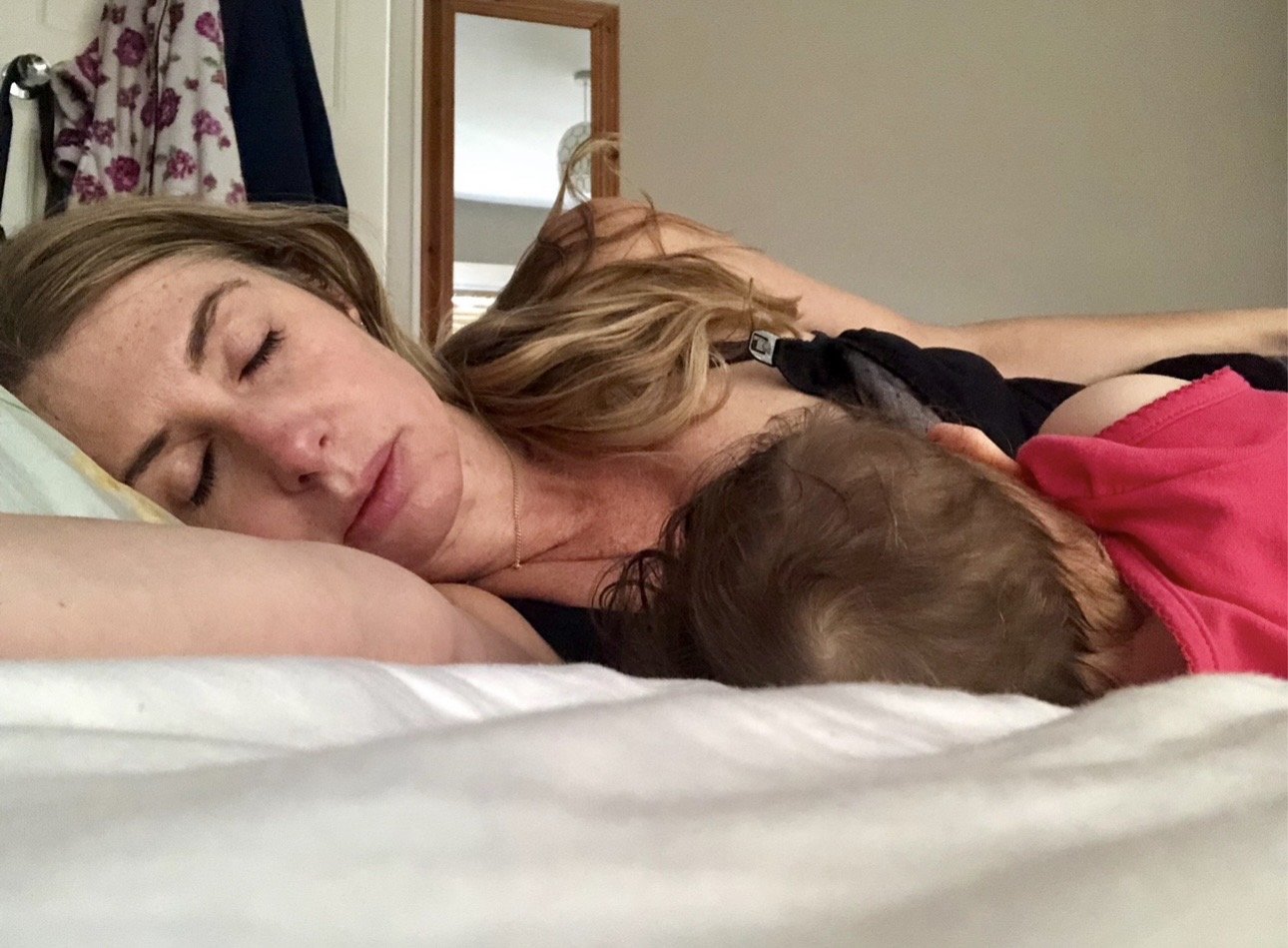
I’ll never forget those early days and months after my daughter was born.
The birth was life-threatening for both of us. I moved from survivor to warrior, carrying a cocktail of terror, ecstasy and power that I had never experienced before.
I also had PTSD. My nervous system felt as though it were being sparked by electric shocks. Yet I smiled and cooed at my baby. I was deeply happy that we had made it through a difficult pregnancy, following a miscarriage. She was finally here, and I felt determined to process my anxiety, heal my heart and be fully present for my girl.
I tackled postpartum life like a mama bear or perhaps a lioness. I was fierce, protective and unapologetic about my body and my nakedness. I had survived. She had survived. Nothing was going to stop me from mothering her with everything I had.
Then, somewhere along the way, the exhaustion hit. And I carried on because, at the time, carrying on felt like my only choice.
Was I depressed? That question stayed with me. I didn’t feel depressed in the way I expected depression to feel. I experienced joy alongside the anxiety. I adored my daughter. I could laugh, connect and feel grateful.
But I was also exhausted, overwhelmed and struggling to understand what was happening in my body and mind.

So I kept asking myself: What is wrong with me? It took years to find the clarity I needed.
Eventually, I began to understand that I was experiencing the collision of two major life transitions: becoming a new mother and perimenopause. I have always struggled emotionally and hormonally as a woman with endermitriosis, but again I didn’t realise how much this was impacting me in perimenopause.
Postpartum and perimenopause can share symptoms, including mood changes, anxiety, disrupted sleep, fatigue, vaginal changes and hot flushes. After childbirth, there is also a significant drop in oestrogen, which can make the picture even more difficult to interpret.
For me, the symptoms were not neatly labelled. They were layered on top of birth trauma, PTSD, new motherhood, sleep deprivation, endermitriosis and the enormous responsibility of caring for a baby.
It was not one thing. It was everything happening at once.
The missing piece: For years, my blood tests showed nothing that clearly explained how I felt. This is one of the most difficult aspects of women’s health: the experience can be profoundly real, while the tests appear reassuring.
Perimenopause is often diagnosed through a woman’s symptoms and overall clinical picture. For women over 45, routine hormone testing is generally not recommended because hormone levels fluctuate and a single result may not reflect what is happening across the cycle.
But I was 43 when I became a mother. I struggled on for three years. I was young enough, in the eyes of some professionals, for perimenopause not to be considered. It was only when a doctor finally said, “Let’s try you on HRT and then we will know,” that we began to explore whether changing hormone levels were part of the picture.
That conversation became a turning point. Not because HRT is a universal answer - it isn’t. More because someone was finally willing to look beyond one label and consider the whole woman in front of them.
The woman who returns to work
Since creating my Menopause Advantage and MenoCare support programmes, I have heard many stories that echo my own.
When I facilitate workplace workshops, there is often a woman in the room who has returned to work with a young baby in nursery, and she is not doing well.
She may be struggling with:
• relentless fatigue and broken sleep;
• anxiety, irritability or emotional overwhelm;
• brain fog and a loss of confidence;
• feeling disconnected from the woman and leader she used to be;
• symptoms she cannot easily explain;
• guilt because she believes she should simply be grateful.
Sometimes she approaches me afterwards with tears in her eyes. She thanks me for shining a light on something she has been experiencing but could not name. Her realisation matters.
Because once we have language for what is happening, we can begin to seek the right support. We can stop interpreting every symptom as a personal failure. We can recognise that returning to work after having a baby is already a major transition and that perimenopause may be shaping the experience too.
Not every struggle is depression but every struggle deserves support.
It is important not to dismiss postpartum depression, anxiety or trauma simply because a woman also feels joy. Mental health difficulties can exist alongside love, gratitude and moments of happiness.
PTSD can also occur after a traumatic birth, and postpartum mental health support may be needed even when depression does not feel like the right description. Specialist perinatal mental health services support conditions including anxiety, depression, PTSD and obsessive-compulsive disorder.
And if someone experiences hallucinations, delusions, severe confusion, mania or rapidly changing moods after birth, urgent medical help is needed because postpartum psychosis is a psychiatric emergency.
The point is not to force ourselves into a diagnosis. Rather to become curious about our experience and ask for help when something does not feel right. Or interject if you see that a woman is struggling.
Why I do this work
I do this work because no woman should have to become her own medical detective while trying to care for a baby, recover from childbirth, return to work and hold everything together.
No woman should have to suffer in silence because her symptoms do not fit neatly into one category.
No woman should be made to feel that she is failing because she is struggling during a time that is supposed to be filled with happiness.
Sometimes what we need is not more resilience.
Sometimes we need someone to listen carefully, join the dots and help us understand that our experience makes sense.
This work is a lifeline for women.
It helps them move from confusion to clarity, from shame to self-compassion, and from surviving to living with greater power and choice.
Because the woman returning to work today is not the same woman she was before motherhood.
She may be a mother, a leader, a partner, a professional and a woman in the midst of profound hormonal and emotional change.
And she deserves to feel like herself again - not the woman she was before, but the woman she is becoming now.
If you are experiencing distressing physical or emotional symptoms after having a baby, speak with your GP, health visitor or another qualified healthcare professional. If you feel unsafe, have thoughts of harming yourself or your baby, or experience confusion, hallucinations or unusual beliefs, seek urgent help.